Frozen Shoulder
06.10.2026 | Blog

Frozen Shoulder: Symptoms, Causes and Treatment
Frozen shoulder, also known as Adhesive Capsulitis, is a common condition that causes shoulder pain, stiffness, and reduced movement. The condition can make everyday activities such as dressing, reaching overhead, or putting on a seatbelt more difficult.
Frozen shoulder usually develops gradually and may take several months to improve. Early assessment and appropriate treatment can help manage pain and restore shoulder movement.
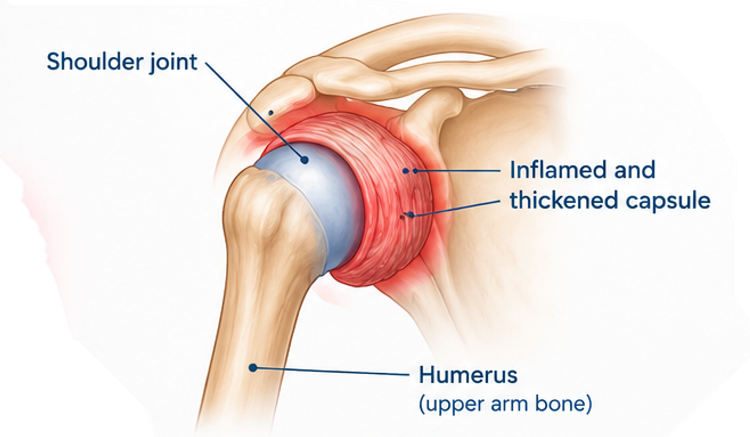
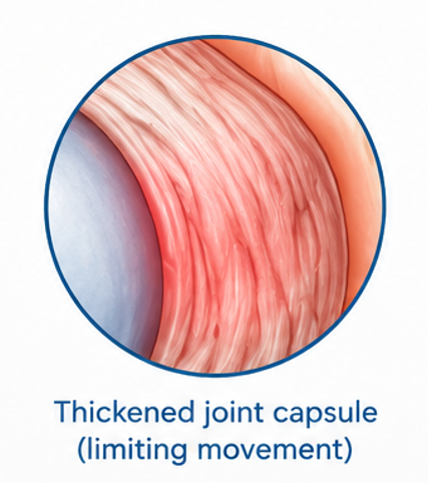
What Are the Symptoms of Frozen Shoulder?
The main symptoms of frozen shoulder are shoulder pain and stiffness. Symptoms may develop slowly and can become more noticeable over time.
Common symptoms include:
- Persistent shoulder pain
- Increasing stiffness in the shoulder
- Difficulty lifting the arm
- Difficulty reaching behind your back
- Trouble putting on clothes or reaching overhead
- Reduced ability to perform normal daily activities
Some people may experience significant stiffness even when the pain begins to improve.
What Causes Frozen Shoulder?
Frozen shoulder can sometimes develop without a clear cause. However, the risk may be higher after a shoulder injury, surgery, or a period of reduced shoulder movement.
Certain health conditions may also increase the risk of developing frozen shoulder. Your doctor or physiotherapist can assess your symptoms and determine whether frozen shoulder may be contributing to your shoulder pain and stiffness.
How Long Does Frozen Shoulder Last?
Frozen shoulder typically develops in stages and can take months to improve. Recovery time varies from person to person. Although frozen shoulder may eventually improve, appropriate treatment can help reduce pain, maintain shoulder movement, and support recovery.
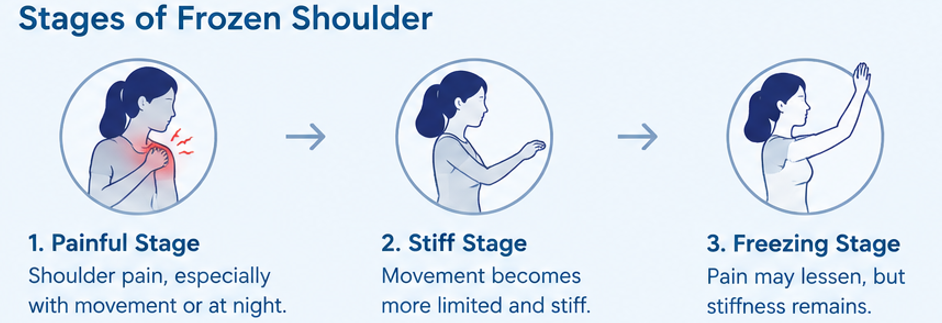
How Is Frozen Shoulder Treated?
Treatment depends on the severity of your symptoms and how much your shoulder movement is affected.
Treatment may include:
- Physiotherapy to improve shoulder movement and flexibility
- Stretching and exercises to reduce stiffness
- Pain management to help you stay active and comfortable
- Medication or injections, when recommended by a healthcare professional
It is important to follow a suitable exercise programme by physiotherapist and avoid forcing painful movements, as this may aggravate your symptoms.
Take the First Step Towards Better Shoulder Movement

Living with shoulder pain and stiffness can affect your work, sleep, and everyday activities. Early assessment and appropriate treatment can help you manage frozen shoulder and work towards better shoulder function.
If you are experiencing persistent shoulder pain or difficulty moving your arm, speak with a qualified healthcare professional for an assessment such as Doctor and Physiotherapist.